
Building a Diversified Portfolio: What Melbourne Professionals Need to Know
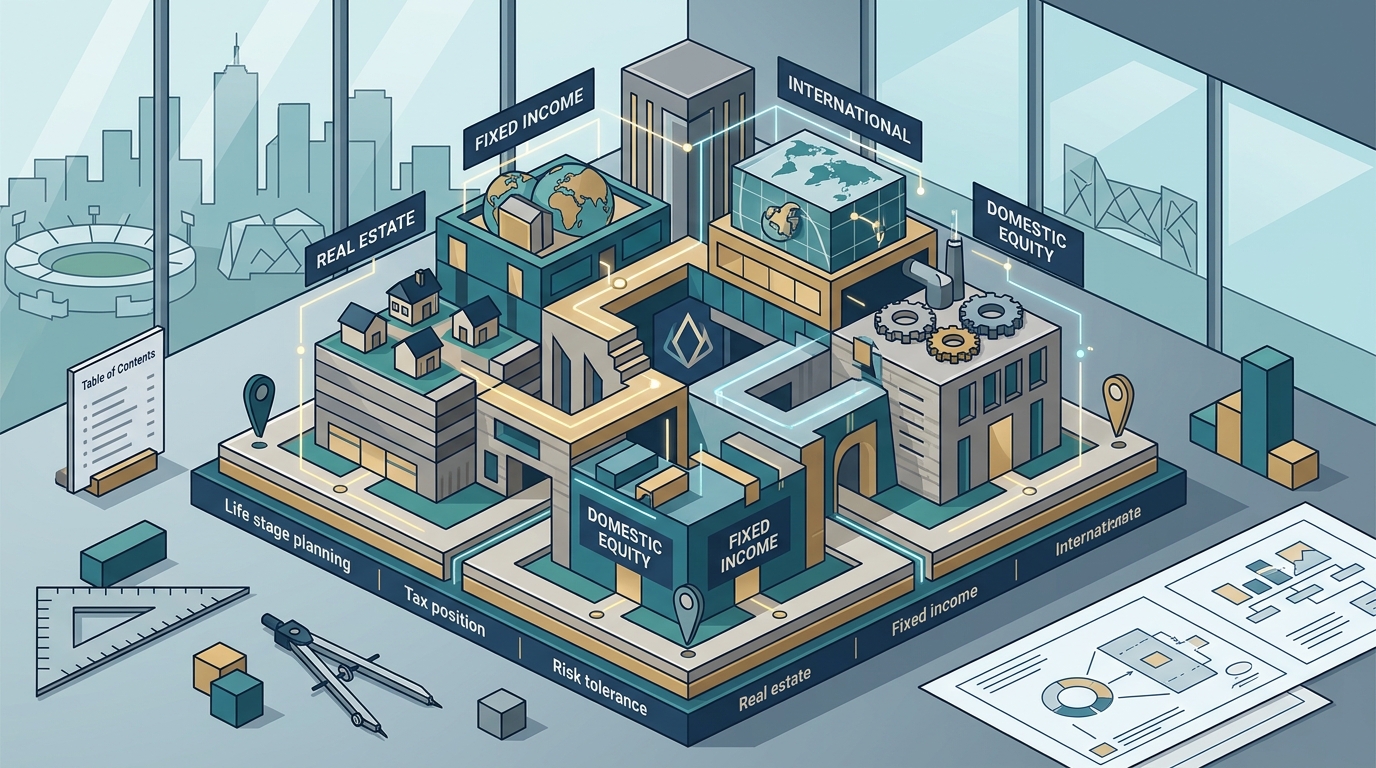
When building a diversified investment portfolio, Melbourne professionals should look for an adviser who aligns asset allocation with their specific life stage, tax position, and risk tolerance. The goal is not simply to pick winning stocks, but to construct a resilient structure that withstands market volatility. At Obsidian Wealth, we focus on how your investments fit into your broader financial picture, ensuring your portfolio supports your long-term ambitions rather than just chasing short-term returns.
The Core Purpose of Diversification
Diversification is the practice of spreading investments across different asset classes, regions, and sectors to reduce risk. For a high-income professional, the risk is not just market downturns, but the concentration of wealth in a single area, such as a business or a specific industry. A well-structured portfolio ensures that no single event can significantly derail your financial plan. This structural approach is more important than trying to predict the next market trend.
Consider a professional whose career is heavily tied to the technology sector. If their investment portfolio is also heavily weighted toward tech stocks, they are effectively doubling their exposure to one industry. If the tech sector corrects, both their income and their savings could be impacted simultaneously. By diversifying into defensive assets, international markets, and fixed income, you create a buffer that protects your wealth regardless of where your career takes you.
Aligning Asset Allocation with Your Life Stage
Asset allocation is the decision of how much of your portfolio is invested in shares, property, fixed income, and cash. This mix should evolve as you move through different life stages. A professional in their thirties with a long investment horizon can typically tolerate more volatility to pursue growth. However, as you approach retirement, the focus shifts toward capital preservation and generating a reliable income stream.
At Obsidian Wealth, we assess your investment approach based on your timeframe and access needs. We consider how much risk is appropriate for your specific situation. For example, if you are planning to buy a property in five years, that capital should be held in lower-risk assets, while your long-term retirement savings can remain in growth-oriented investments. This segmentation ensures that your short-term goals do not jeopardize your long-term wealth.
The Role of Tax and Ownership Structures
Tax efficiency is a critical component of portfolio construction, yet it is often overlooked in favor of raw returns. The way you hold your investments, whether in your personal name, jointly, through a trust, or in superannuation, has a significant impact on your after-tax returns. A portfolio that looks strong on paper may be inefficient if it is held in a structure that triggers unnecessary tax liabilities.
We work with your accountant to assess how your investments, super, and ownership arrangements fit your circumstances. For instance, holding growth assets in super can be highly tax-effective due to the tax-free growth phase and the tax-free pension phase. By coordinating with your tax professionals, we ensure that your investment strategy is not only diversified but also optimized for your specific tax position. This collaboration ensures that the advice we provide is practical and aligned with your broader financial arrangements.
Behavioral Discipline and Cost Management
Behavioral coaching is the process of helping investors stick to their plan during periods of market stress. Research consistently shows that the single largest component of an adviser’s measurable value is not stock selection, but preventing investors from making emotional decisions at the wrong moments. Selling in a panic near the bottom or chasing whatever has just run hot can quietly cost investors more than fees ever do.
Cost management is equally important. Platform, management, and transaction fees can erode your returns over time. We review the costs of your portfolio and ensure that you are receiving appropriate value for what you are paying. By keeping costs low and maintaining a disciplined rebalancing schedule, we help you avoid the common pitfalls that undermine long-term wealth creation. This focus on discipline and cost efficiency is what separates a passive portfolio from a professionally managed one.
Integrating Your Portfolio with Your Broader Plan
Your investment portfolio does not exist in a vacuum. It must work alongside your cash reserves, debt, super, and insurance. We consider whether investing or repaying debt suits you better, how much to keep accessible, and how the portfolio supports goals such as retirement or helping family. This holistic view ensures that your investments are not just growing, but are actually serving your life goals.
For Melbourne professionals, this means looking at the big picture. If you have a large mortgage, we might recommend directing surplus income toward debt reduction rather than investing, depending on the interest rate and your risk tolerance. If you have significant insurance needs, we ensure that your portfolio is not over-leveraged. By integrating your investments with your broader financial plan, we create a cohesive strategy that is resilient and aligned with your ambitions.
Key Takeaways
- Diversification is about reducing risk by spreading investments across different asset classes and regions.
- Asset allocation should be tailored to your life stage, investment horizon, and risk tolerance.
- Tax efficiency is a critical component of portfolio construction and should be coordinated with your accountant.
- Behavioral discipline is essential for long-term success, as emotional decisions can significantly impact returns.
- Cost management is important, as fees can erode your returns over time.
- Your investment portfolio should be integrated with your broader financial plan, including debt, super, and insurance.
Frequently Asked Questions
How much should I invest in shares versus fixed income?
The right mix depends on your age, investment horizon, and risk tolerance. Generally, younger investors can tolerate more volatility and may hold a higher proportion of shares, while older investors may shift toward fixed income to preserve capital.
Do I need a financial adviser to build a diversified portfolio?
While you can build a portfolio yourself, a financial adviser can provide valuable guidance on asset allocation, tax efficiency, and behavioral discipline. They can help you avoid common mistakes and ensure your portfolio is aligned with your long-term goals.
How often should I rebalance my portfolio?
Rebalancing should be done regularly, such as annually or when your asset allocation drifts significantly from your target. This helps you maintain your desired level of risk and ensures your portfolio remains aligned with your goals.
What is the role of superannuation in my investment portfolio?
Superannuation is a key component of your retirement savings and can be highly tax-effective. It should be considered as part of your overall investment strategy, with asset allocation tailored to your retirement timeline.
How do I choose the right investment platform?
When choosing a platform, consider the fees, range of investments available, and the quality of the service. A financial adviser can help you compare different platforms and choose one that fits your needs and budget.
Start with a Conversation
Building a diversified portfolio is a journey, not a destination. It requires ongoing review and adjustment as your circumstances change. At Obsidian Wealth, we are here to guide you through this process, ensuring that your investments are aligned with your long-term goals. To discuss your situation and whether we can help, book a free 15-minute call with our team.